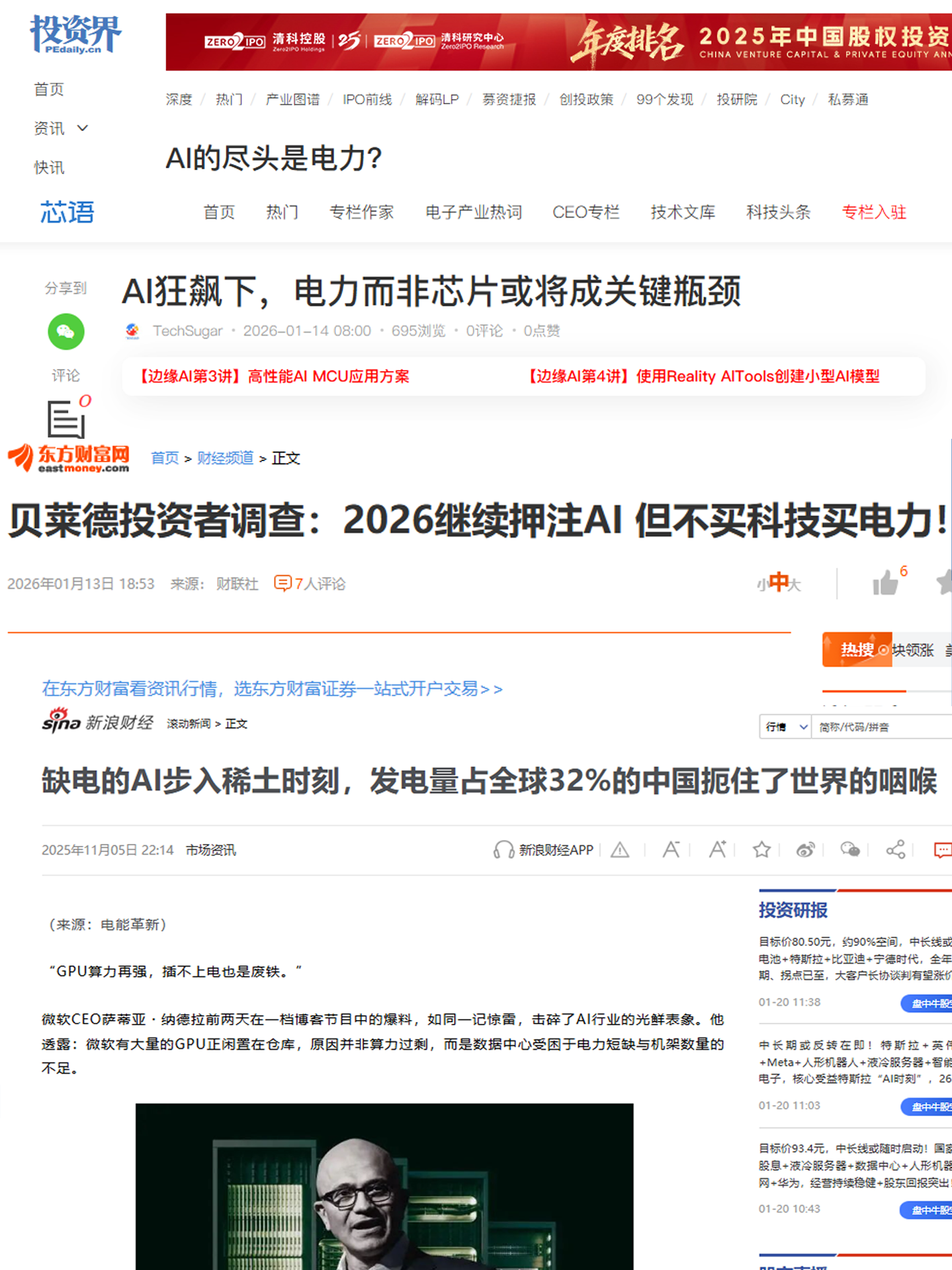
Recently, a news story has garnered widespread attention: the global AI industry is collectively hitting a "power ceiling."
Microsoft and OpenAI have confirmed that a massive number of GPUs are forced to sit idle due to power shortages. NVIDIA has issued an urgent warning, and AI clusters in multiple regions are already facing downtime risks. BlackRock explicitly pointed out in its latest *Investment Directions* report that by 2026, the global investment focus is shifting from tech companies to energy and infrastructure.
As infinite expansion of computing power is paused by energy realities, a consensus is emerging: the future belongs not to those who compute the hardest, but to those who are "more power-efficient, higher-performing, and more sustainable."
This transformation is not limited to the AI sector; it is also reshaping the healthcare industry. As an innovative force in the global medical supply chain, EndoFresh® (Daichuan Medical) provides a benchmark model for green healthcare in an era of energy scarcity through its low-power technology and "closed-loop ecology" design.
PART 1 Adding to Healthcare Efficiency While Subtracting from Energy Consumption
The answer for AI data centers lies in energy storage and power supply efficiency; similarly, the healthcare industry stands at a turning point of "high energy consumption vs. sustainability." As the world enters a new phase of "tight energy constraints," EndoFresh® delivers a forward-looking solution.
Traditional endoscopy equipment relies on complex reprocessing and disinfection systems, which come with high energy consumption, heavy resource depletion, and management risks. In contrast, the Daichuan Medical EndoFresh® single-use endoscope system achieves a more efficient and controllable clinical operational model with lower energy consumption and higher efficiency.
- Ultimate Energy Efficiency | Low Power Consumption Supporting Continuous Diagnosis & Treatment
A portable power station of just 1000W is sufficient to complete a full clinical workflow.
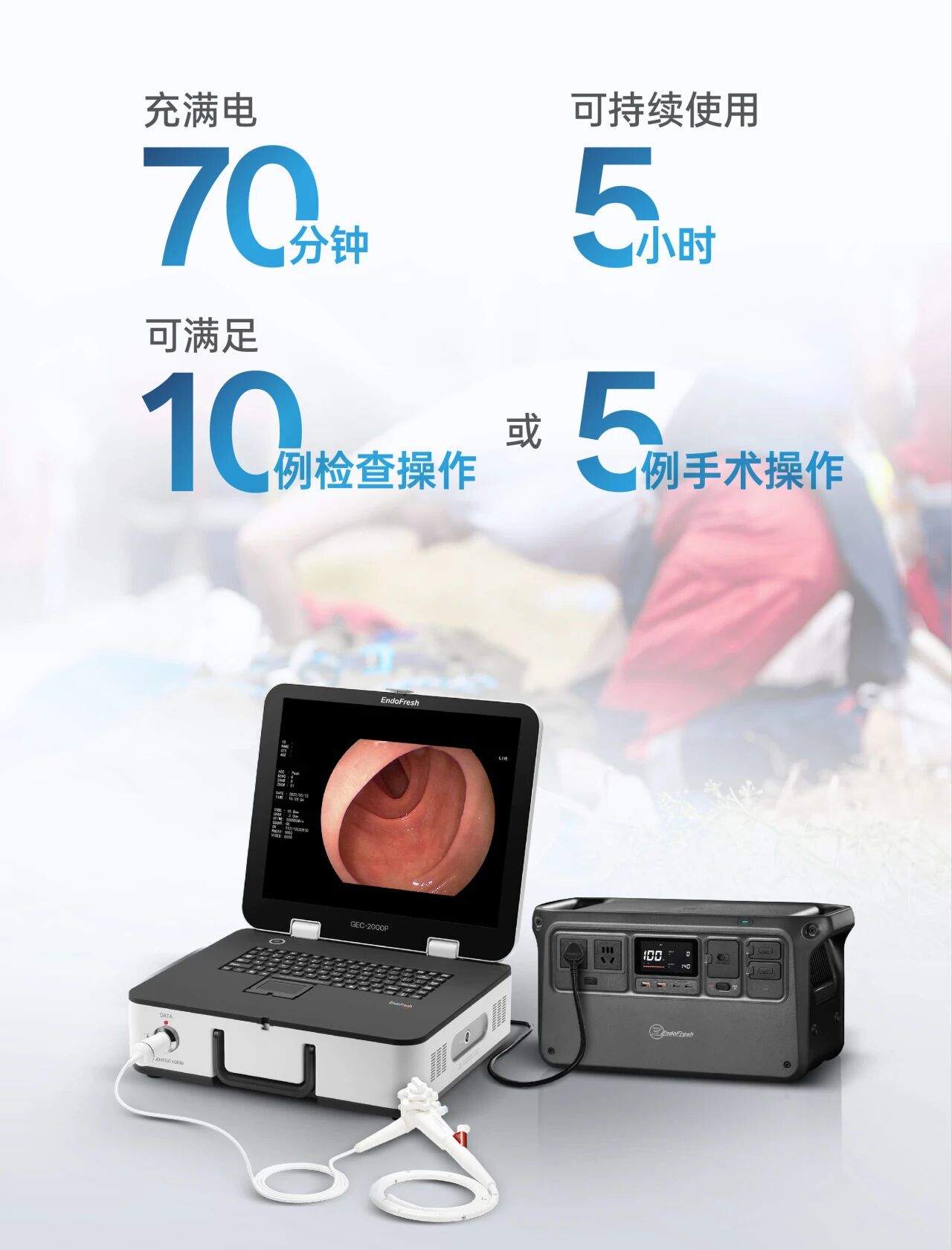
Without relying on fixed power grids, it truly achieves an uninterrupted endoscopic diagnostic and treatment solution that allows for "one hour of charging, zero fear of blackouts all day."
- Adaptable Scenarios | Stable Operation Independent of Infrastructure
Primary healthcare and remote areas with limited infrastructure
Emergency and specialized scenarios with unstable power supplies or sudden blackouts
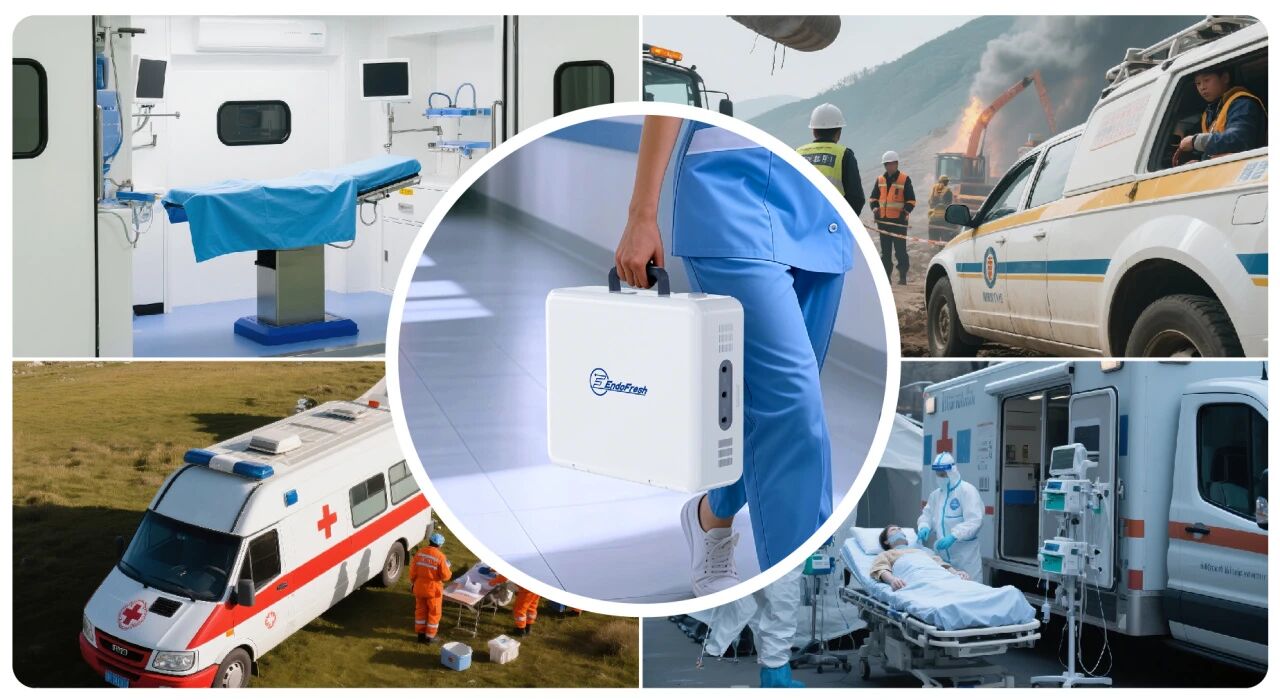
Without requiring complex auxiliary setups or adding to the electrical load, it consistently guarantees continuous, stable, and high-quality endoscopic operations.
Ready-to-use and disposable: Eliminates repeated washing, disinfection, and drying, cutting off the continuous consumption of water, electricity, and chemical disinfectants at the source.
Multiplied Safety: Concurrently eliminates the risk of cross-infection while lowering energy consumption.
With simultaneous improvements in efficiency and safety, "low power consumption × high efficiency" is becoming the underlying capability of medical devices at a time when energy constraints have become a global consensus. This is precisely the "certain solution" the global market is seeking for the healthcare industry in an age of energy scarcity.
PART 2 Single-Use Digestive Endoscopes: Beyond "Power Saving" to "Sustainability"
Many worry that "single-use" implies waste, but EndoFresh® is reshaping this perception with data. We have not only reduced power consumption but also practiced the concept of a "closed-loop ecology" throughout the product life cycle.
1. Modular Design and Resource Recycling
Easy to dismantle and recycle: The EndoFresh® R&D team utilizes advanced modular design, allowing components to be easily disassembled to improve resource recycling efficiency.
Metal recycling: Taking the 0.9m specification scope body as an example, its metal content accounts for approximately 37.86%. These metal parts can be completely melted and recycled, reducing resource waste at the source.
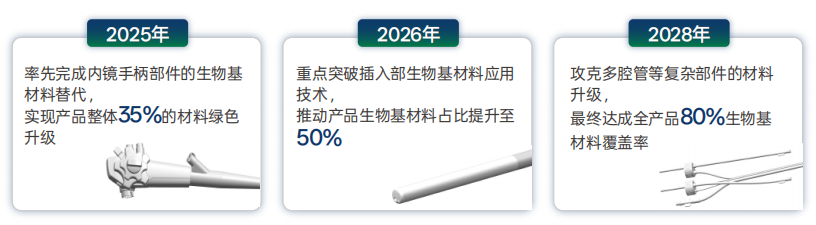
2. Continuous Innovation: A Three-Step Approach to Bio-Based Materials
The EndoFresh® team is progressively replacing traditional petroleum-based plastics with eco-friendly, plant-derived bio-based materials.
3. Subtracting from the Carbon Footprint
Carbon reduction data: Research shows that 100 cases of traditional GI endoscopy generate up to 1,501 kg of carbon emissions, equivalent to burning 1,680 lbs of coal.
Material optimization:Single-use endoscopes not only eliminate environmental pollution from chemical disinfectants but also further reduce material usage by approximately 5% through handle innovation, significantly lowering the product's carbon footprint.

PART 3 Qualitative Leap in Efficiency: Beyond Safety to Ecological Protection
The reprocessing and disinfection process of traditional endoscopes consumes vast amounts of water, energy, and highly corrosive chemical agents (such as glutaraldehyde).
The EndoFresh® Single-Use Digestive Endoscope System:
Eco-friendly:The "ready-to-use and disposable" model eliminates water pollution and resource consumption caused by the disinfection stage at the source.
Win-win for doctors and patients: Effectively prevents cross-infection and eliminates potential threats to the respiratory tract and skin of healthcare workers caused by chemical residues.
In the eye of the storm of the 2026 global "power famine," China's power supply chain is emerging as a global backbone. Similarly, EndoFresh® (Daichuan Medical) is leading the global green healthcare track with a low-carbon, high-efficiency Chinese solution.
Lower energy consumption, higher efficiency, and a greener future.